
The Indian government has introduced a 0.4% fee on UPI transfers above Rs 2,000 made to merchants, effective October 15, ending nearly six years of free merchant payments. This move led to initial rallies in fintech stocks like Paytm and Mobikwik, though some later pared gains. Person-to-person transactions and small payments remain free for customers, with the fee being a Merchant Discount Rate (MDR).
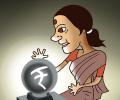
The Finance Ministry has refuted allegations that US pressure influenced the decision to levy a 0.4% Merchant Discount Rate (MDR) on select UPI payments. It clarified that NPCI guidelines prioritise RuPay credit cards on UPI to foster a domestic payment ecosystem and that the MDR introduction aims to create a sustainable revenue model for smaller domestic companies, thereby protecting India's sovereignty in digital payments.

The Indian government has introduced a 0.4% Merchant Discount Rate (MDR) on UPI person-to-merchant (P2M) transactions exceeding Rs 2,000, effective October 15. This move ends nearly six years of fully free UPI payments, though person-to-person (P2P) transfers and small P2M payments remain free. The charges aim to bolster investment in UPI infrastructure, with specific exemptions and caps for essential sectors.

The Payments Council of India has confirmed that Unified Payments Interface (UPI) services will continue to be free for consumers and small merchants, despite a recent Lok Sabha Bill. This clarification addresses concerns about potential charges, emphasising that while a sustainable financial model for UPI infrastructure is being developed, transaction charges will not be passed on to users or small businesses.

A think tank, GTRI, has urged India to resist US pressure regarding its UPI policies, advocating for the defence of competition, policy autonomy, and the long-term sustainability of its payments ecosystem. This comes as the Lok Sabha passed a bill allowing charges on UPI transactions, a move GTRI suggests should not be influenced by foreign trade complaints.

Fuel pump dealers in Madhya Pradesh plan to stop accepting UPI payments exceeding Rs 2,000 for petrol and diesel from October 16, citing concerns over the proposed Merchant Discount Rate (MDR). The Confederation of All India Traders (CAIT) has urged the government to reconsider the MDR imposition, warning it could hinder digital payment adoption and impact traders' profits.

Shares of fintech firms, particularly Paytm, saw significant movement after the Indian government introduced a 0.4 per cent fee on UPI transfers exceeding Rs 2,000 made to merchants, effective October 15.
The Lok Sabha has passed a Bill to amend the Payment and Settlement Systems Act, 2007, authorising the government to permit banks and service providers to levy charges on UPI and other electronic payment modes. This move aims to create a sustainable revenue model for the digital payments ecosystem, shifting from the current exemption of UPI transactions from such charges.

The Congress party has strongly refuted claims by Parliamentary Standing Committee on Finance Chairperson Bhartruhari Mahtab that opposition MPs supported levying a Merchant Discount Rate (MDR) on UPI transactions. Congress MP Manish Tewari termed Mahtab's remarks "erroneous and fallacious," clarifying that the committee's recommendation was to "explore" revenue models, not to implement MDR. The party accused Mahtab of misleading due to his recent switch to the BJP.

'UPI has been free since Covid, so why is the government charging us now?'

The National Payments Corporation of India (NPCI) stated that the Merchant Discount Rate (MDR) "is distributed only amongst the UPI ecosystem, to further invest into infrastructure resilience, innovation, cybersecurity (protecting the UPI infrastructure with banks and non-banks) and customer service."

A think tank, GTRI, has urged India to resist US pressure regarding its UPI policies, advocating for competition, policy autonomy, and a sustainable payments ecosystem. This comes as the Lok Sabha passed a bill allowing charges on UPI, and the US has criticised India's digital payment systems, raising concerns about the future of India's digital payment landscape.

'These limits will change. Very soon restrictions, restrictions will come.'

The Centre on Sunday said there are no plans to levy charges for making payments through Unified Payments Interface (UPI) while saying the service is a "digital public good with immense convenience". The ministry of finance said the concerns of service providers for cost recovery have to be met through other means. "UPI is a digital public good with immense convenience for the public & productivity gains for the economy.

SEBI Chairman Tuhin Kanta Pandey stated that the National Stock Exchange (NSE) has not submitted any proposal seeking approval to trade on its own platform after getting listed, and such trading is currently not permitted. He also confirmed that SEBI would examine concerns raised by brokers and asset management companies regarding the new UPI Merchant Discount Rate (MDR) framework.

Fintech company BharatPe has expressed strong support for the government's new Merchant Discount Rate (MDR) framework for UPI merchant transactions, which introduces a 0.4% fee on transfers exceeding Rs 2,000. The company explicitly distanced itself from critical remarks made by its former co-founder Ashneer Grover, clarifying that his views do not represent BharatPe's stance. BharatPe CEO Nalin Negi highlighted that the framework aims to strengthen digital payment economics, protect consumers and small merchants, and expand adoption in underserved markets, with most transactions remaining unaffected.
Fintech firm BharatPe has publicly supported the government's new Merchant Discount Rate (MDR) framework for UPI merchant transactions, which introduces a 0.4% fee on transfers over Rs 2,000. The company has also distanced itself from its former co-founder Ashneer Grover's strong criticism of these changes, stating his remarks are personal and do not reflect BharatPe's official position. BharatPe believes the new framework will strengthen digital payment economics while protecting consumers and small merchants.
Former Haryana Chief Minister Bhupinder Singh Hooda has criticised the newly introduced fees on UPI payments, stating they will lead to increased inflation for the common man. He dismissed government claims that customers would not be burdened, arguing that merchants would pass on the costs. Hooda demanded the immediate withdrawal of these fees, highlighting that the government's move contradicts its 'Digital India' initiative.
Several executives argue that UPI has the potential to grow tenfold, but warn that the absence of a monetisation model risks stagnating the real-time payments system, which has been recording all-time-high transaction volumes every year.

The goal is to ensure that your bank works for you, providing liquidity and convenience without charging you for the privilege of holding your own money.
This would imply a 29 per cent year-on-year rise, significantly lower than growth rates seen in recent years.
An hour-long disruption could affect around 40 million UPI transactions.
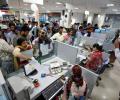
RBI Deputy Governor Shirish Chandra Murmu has dismissed concerns that the new Merchant Discount Rate (MDR) on UPI payments above Rs 2,000 will increase cash transactions. He also clarified the 'cash paradox' of rising digital payments alongside cash in circulation, explaining cash's dual role. Murmu further detailed the RBI's extensive regulatory changes aimed at reducing compliance burdens and emphasised that accountability for AI-driven decisions in finance will remain with institutional boards.

West Bengal Police have arrested three individuals from Uttar Pradesh and Bihar in connection with the murder of Chandranath Rath, an aide to Suvendu Adhikari. The arrests followed leads from a UPI transaction made at a toll plaza.

Delhi Police have arrested a man from Rajasthan for allegedly running an online shopping fraud racket, cheating people through fake social media advertisements offering discounted branded suits and sarees.
RBI Governor Sanjay Malhotra stated it is "premature" to discuss the implementation of Merchant Discount Rate (MDR) for digital payments, advising a "wait-and-watch" approach. He emphasised that investment in public payment infrastructure is necessary and someone must bear the cost, whether through taxes or MDR. The government is currently working on amendments to relevant statutes, and the RBI is focused on strengthening this infrastructure.

Bhubaneswar police have busted a fraudulent digital escort service racket, arresting four individuals for allegedly misusing women's photographs on social media and cheating customers through online payments. The investigation, initiated by a woman's complaint, led to the seizure of digital evidence and a public advisory against such scams.
The CBI has registered an FIR in the alleged murder of Chandranath Rath, an aide to West Bengal Chief Minister Suvendu Adhikari, taking over the investigation from the state police following a request from the state government.
Finance Minister Nirmala Sitharaman clarified that the Merchant Discount Rate (MDR) on digital transactions applies to merchants, not customers, and aims to support banks and fintech in infrastructure investment. She countered Congress leader Jairam Ramesh's claims, stating that a committee will decide on MDR only after Parliament passes the Taxation and Other Laws (Amendment) Bill, 2026, a process currently stalled by parliamentary disruptions.
National Payments Corporation of India (NPCI) on Wednesday said there is no charge for the bank account to bank account-based UPI payments or normal UPI payments.
The CBI has registered an FIR in the alleged murder of Chandranath Rath, an aide to West Bengal Chief Minister Suvendu Adhikari, taking over the investigation from the state police following a request from the state government.

Kerala Police have issued a warning against online fraudsters selling fake tickets for the upcoming India-West Indies first ODI match in Thiruvananthapuram. Scammers use social media to lure victims, collect personal details, and demand multiple payments under various pretexts, advising the public to only use official booking platforms.

Meesho, a value-commerce platform targeting middle- and lower-income geographies, is poised for significant growth driven by its asset-light model and low fulfilment costs, but faces intense competition from e-commerce giants and high valuations.

NPCI BHIM Services Ltd is expanding the BHIM app to feature phones to increase financial inclusion and diversify revenue through financial product distribution. The app aims to double its market share and is focusing on partnerships with banks and new features like UPI Circle.

An analysis for the first eight months of CY18 shows that the value of RuPay and UPI transactions constitute 65.2 per cent of all transactions done through debit and credit cards, in value terms, across retail outlets by the end of August.

UPI has catapulted India into the forefront on the global digital payments landscape. Working hand in hand, the AePS payments system is making life easy for rural folks, notes Tamal Bandyopadhyay.

Samsung has unveiled a pair of fresh Galaxy handsets for the Indian market, expanding its A-range with the A57 5G alongside the A37 5G.

Cash payments will be discontinued at toll plazas on national highways from April 10, with FASTag as the primary mode of payment and UPI as a fallback option at a higher charge.
To increase the adoption of credit on United Payments Interface (UPI), National Payments Corporation of India (NPCI) is looking at an interchange fee for transactions lower than that for a credit-card transaction. Sources in the know said these charges could be 1-1.2 per cent. Fintech participants concur with the view that the interchange fee is expected to be lower than that for a credit-card transaction.

'Dark patterns exploit human psychology, cognitive biases, urgency, confusion, or lack of attention to increase revenue for digital platforms at the expense of consumer choice and transparency.'
